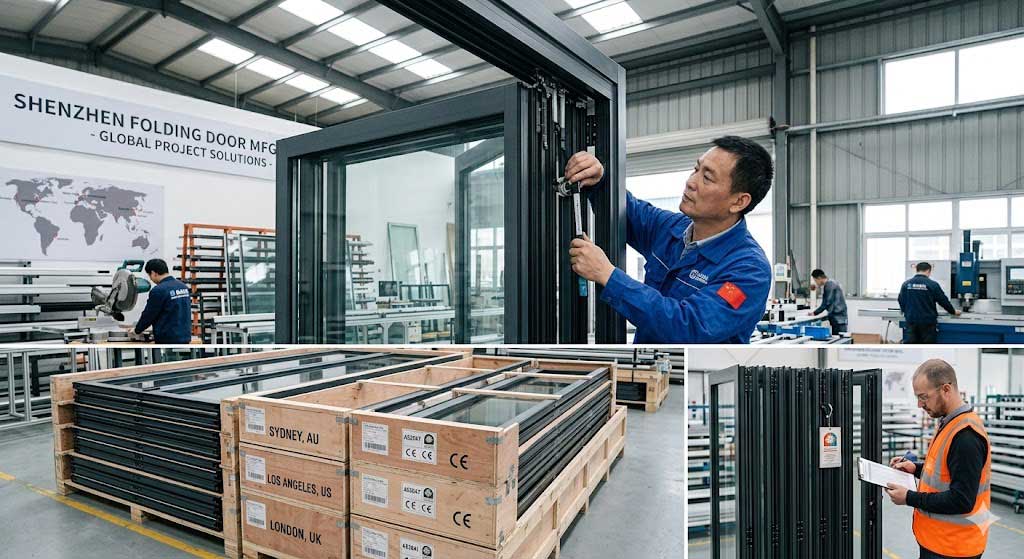
Professional Aluminum Folding Door Manufacturer for Global Projects
The Real Jobsite Problem Large opening façades are popular in modern residential and commercial architecture. Architects want uninterrupted views. Restaurants want full indoor-outdoor transitions. Villas want entire walls that open. The common solution is the aluminum folding door system. But many projects run into the same problem after installation. The doors sag. Panels become difficult to slide.Rollers fail.Alignment shifts after two or three years. Contractors often assume the aluminum frame is the weak point. In reality, most failures are caused by undersized hardware, thin profiles, and poor system engineering. Cheap folding doors are often designed for showroom display, not for real building loads. Table of Contents Request A Quote A typical residential folding panel can weigh between 80kg and 150kg depending on: Glass thickness Panel size Frame thickness Hardware system Many low-cost systems still use rollers rated for only 80kg. This mismatch causes progressive failure. The rollers deform first.Then hinges misalign.Finally the entire folding stack becomes difficult to operate. For large architectural openings, folding door engineering must start with structural capacity — not appearance. Engineering Analysis: Why Folding Doors Fail A folding door system is essentially a suspended moving wall. Each panel transfers weight through hinges to a rolling carriage system. The load then moves through the track into the building structure. Three engineering factors determine long-term performance. 1. Aluminum Alloy and Profile Strength High-performance folding doors use 6063-T6 aluminum extrusion. Lower cost systems often use 6063-T5. The difference is heat treatment. Alloy Temper Strength Typical Use 6063-T5 Air cooled Lower structural strength Basic windows 6063-T6 Artificial aging Higher structural strength Structural doors For large panels, stronger temper reduces frame deformation over time. Profile wall thickness is equally important. Application Typical Thickness Budget folding doors 1.2–1.4 mm Mid-range systems 1.6 mm Heavy-duty architectural systems 2.0 mm Thin aluminum profiles flex under load. This eventually causes hinge misalignment. 2. Panel Weight and Roller Capacity Panel weight is determined primarily by glass. Example calculation: Glass Type Thickness Weight Double glazed 5+12A+5 ~25 kg/m² Double glazed 6+12A+6 ~30 kg/m² Laminated double 6.38+12A+6.38 ~35 kg/m² A typical folding panel: Height: 2.7 mWidth: 900 mm Glass area ≈ 2.43 m² Using 6+12A+6 double glazing: Panel glass weight ≈ 73 kg Add aluminum frame + hardware. Total panel weight ≈ 90–110 kg This means rollers must support more than 100kg repeatedly. Professional systems typically use: 150kg heavy-duty rollers Cheap systems use 80kg rollers, which wear out quickly. 3. Weather Sealing and Wind Pressure Folding doors contain multiple joints between panels. Without proper sealing design, wind pressure can force water through the joints. Key sealing elements include: • EPDM compression gaskets• multi-layer brush seals• drainage channels in the bottom track• pressure equalization chambers Wind pressure ratings vary by market. Market Typical Wind Pressure Requirement Australia 300–450 Pa (AS2047) UK 240–400 Pa (BS EN) US coastal regions 500–700 Pa Systems with poor sealing fail under heavy rain combined with wind pressure. Shenzhen Manufacturing Solution A professional aluminum folding door manufacturer must control more than assembly. The entire supply chain matters. Factories in Shenzhen have developed a vertically integrated production structure that allows better system engineering. Vertical Integration A typical large Shenzhen manufacturer controls multiple production stages: Aluminum extrusion CNC machining Powder coating / anodizing Insulated glass production Hardware assembly Final system testing This integration improves quality consistency. Profile tolerances are controlled at extrusion level. Hardware installation is designed for the exact profile geometry. European workshops often outsource several of these stages. That increases lead time and cost. Request A Quote Structural Profile Design High-performance folding door systems commonly use: 6063-T6 aluminum 2.0 mm structural wall thickness reinforced hinge zones Example structural design: Component Specification Aluminum alloy 6063-T6 Profile thickness 2.0 mm Maximum panel height 3000 mm Maximum panel width 1000 mm This structure reduces deflection during operation. Heavy Duty Hardware Systems Professional folding doors rely on hardware capacity more than frame size. Typical high-performance hardware specification: Hardware Component Specification Roller capacity 150 kg Hinges stainless steel Locking system multi-point Track material hardened aluminum High-quality hardware suppliers include European and German brands, but many Chinese manufacturers now produce comparable heavy-duty systems. Roller bearings are often stainless steel sealed bearings, improving lifespan in coastal climates. Thermal Break Technology For projects in colder climates such as Europe or northern US states, thermal break frames are necessary. Thermal break folding doors include: • PA66 GF25 polyamide insulation strips• dual glazing compatibility• improved condensation resistance Thermal performance example: System Type U-Value Non-thermal folding door 4.5–5.5 W/m²K Thermal break folding door 2.2–3.0 W/m²K Thermal systems are required for many EU residential projects. Supply Chain Reality for Global Projects Large architectural projects require reliable production schedules. Shenzhen manufacturers are competitive because they operate large-scale automated lines. Production Lead Time Typical export order timeline: Stage Time Shop drawing approval 3–5 days Material preparation 5–7 days Production 20–25 days Packaging 2–3 days Total production cycle: 4–6 weeks Container Loading Capacity Folding doors are typically packed vertically inside plywood crates. Example container loading: Container Type Approx Capacity 20FT 80–100 m² 40FT 180–220 m² Actual capacity depends on panel size. Large villa projects usually ship multiple containers. Export Packaging Professional export packaging prevents damage during ocean transport. Common packaging system: • protective film on aluminum• foam corner protection• multi-layer bubble wrap• fumigated plywood crates• steel strapping reinforcement This packaging protects finished surfaces such as powder coating or anodizing. Technical Comparison: Standard vs High-Performance Folding Doors Feature Standard Market Doors High-Performance System Aluminum alloy 6063-T5 6063-T6 Profile thickness 1.4 mm 2.0 mm Roller capacity 80 kg 150 kg Max panel height 2400 mm 3000 mm Glass options Single / basic double Laminated / triple Water penetration 250 Pa 600 Pa Wind resistance 800 Pa 1600 Pa For large architectural openings, the second system type is strongly recommended. Request A Quote Expert Insight Most folding door failures are not caused by aluminum. They are caused by hardware under-capacity. Always compare: Panel weight vs roller rating If the roller capacity is less than the panel weight, the system will eventually fail.
Professional Aluminum Folding Door Manufacturer for Global Projects Read More »