
How to Choose More Durable Curtain Wall Materials for British Museums?

I. Core Principles for Curtain Wall Material Selection: Balancing Durability and Architectural Compatibility
British museum buildings combine a strong sense of historical gravity with modern exhibition requirements. Curtain wall material selection should move beyond the misconception of “strength at all costs” and instead follow the core principles of durability first, architectural compatibility, and functional balance, achieving harmony between safety and aesthetics, preservation and use.
First, key durability indicators must meet strict standards. Materials must satisfy rigid requirements for wind resistance, impact resistance, compressive strength, and long-term durability, adapting to London’s rainy and windy maritime climate while also withstanding indirect loads generated by heavy visitor traffic.
Second, materials must be compatible with the historic architectural character. As the British Museum’s main buildings follow a Neoclassical style, curtain wall materials should visually respond to the existing architecture in terms of color, texture, and surface finish, avoiding visual conflict between modern materials and historic structures.
Third, artifact conservation requirements must be fully considered. Materials should feature low radiation, low emissions, moisture resistance, and thermal insulation to prevent condensation and leakage that could compromise the internal preservation environment. In addition, environmental performance and maintainability should be incorporated into the selection process to support the museum’s long-term energy efficiency and operational needs. The windy maritime climate further underscores the need for robust curtain wall systems capable of resisting strong winds.
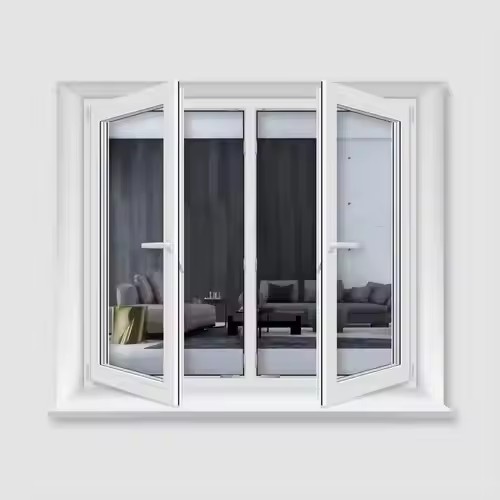
II. Preferred Core Materials: Dual Drivers of High Strength and Compatibility
(1) Panel Materials: Combining High Strength and Functional Performance
Panels form the “face” of a curtain wall, and their durability directly determines the overall impact resistance and protective capability of the system. Based on the specific needs of British museums, the following high-strength panel materials are recommended:
Ultra-clear laminated tempered glass.
Use ultra-clear tempered glass with a thickness of ≥12 mm as the base glass, combined with a PVB interlayer of at least 1.52 mm to form a composite panel structure. The flexural strength of ultra-clear tempered glass is three to five times that of ordinary glass, and its impact resistance can withstand the impact of a 10 kg object falling from a height of 3 meters, effectively preventing risks from accidental visitor collisions or falling objects. The PVB interlayer offers excellent bonding performance; even if the glass breaks, fragments remain adhered, preventing injuries and damage to artifacts.
At the same time, ultra-clear glass provides light transmittance of over 91.5%, reducing dependence on artificial lighting. Low-emissivity (Low-E) coatings can be applied to balance thermal insulation with ultraviolet protection, meeting the constant temperature and humidity requirements essential for artifact preservation.
III. Sealing and Filling Materials: Building a Protective “Safety Net”
Although sealing and filling materials are auxiliary components, they are critical to ensuring the curtain wall’s durability, water tightness, and air tightness. They effectively prevent rainwater infiltration and air leakage that could lead to frame corrosion or panel loosening.
For sealants, silicone structural sealants are recommended, preferably neutral silicone sealants compliant with GB/T 14683-2017 standards. These sealants offer tensile bonding strength of ≥1.0 MPa and elongation at break of ≥300%, providing excellent adhesion and elasticity. They can accommodate thermal expansion and contraction between panels and frames, preventing cracking and leakage.
For load-bearing joints, a dual-sealing system combining silicone structural sealant and polysulfide sealant is advised. Polysulfide sealants offer superior oil resistance and aging resistance, enhancing long-term sealing reliability.
For filling materials, high-density polyethylene (HDPE) foam backer rods are recommended, with a density of ≥30 kg/m³ and compressive strength of ≥0.15 MPa. These effectively fill curtain wall joints, improve thermal insulation and structural stability, and prevent water accumulation that could cause material corrosion.
IV. Supporting System Integration: Enhancing Overall Durability and Longevity
Wind Load and Seismic Resistance Integration
London is subject to prevailing westerly winds throughout the year, with frequent strong wind events. Although the UK is a low-seismic-risk region, curtain wall systems must still provide a baseline level of seismic resistance. Beyond material selection, appropriate wind-resistance and seismic systems are essential to further enhance durability.
For wind resistance, selected panels and framing systems should be validated through wind tunnel testing to ensure no deformation or damage occurs under extreme wind pressure. Additional wind-resistant mullions and horizontal bracing should be incorporated into the curtain wall design. Multi-point support structures help distribute wind loads evenly to the main building structure, preventing localized stress concentration and structural failure.
For seismic performance, flexible connection node designs should be adopted. Connectors with rotational or sliding capability allow the curtain wall to undergo limited displacement during seismic events, reducing impact forces while maintaining overall structural integrity and sealing performance after movement.
V. Long-Term Assurance Measures: Full Lifecycle Control from Material Selection to Maintenance
Enhancing curtain wall durability cannot be achieved through material selection alone. A comprehensive lifecycle management system—covering material selection, construction, and ongoing maintenance—is required to ensure alignment between material performance and design intent, and to maintain long-term durability.
During the material selection phase, strict incoming inspection procedures should be enforced. Core materials such as panels, frames, and sealants must be tested for strength, corrosion resistance, and bonding performance, and non-compliant materials must not be allowed on site. Priority should be given to material brands with international certifications and proven application in comparable projects, ensuring stable and reliable quality over time.