
How to Design Top-Tier Duplex Folding Doors for Canadian Homes?
I. Climate Adaptation: Hardcore Performance for Extreme Environments
Most regions of Canada experience long, harsh winters, with temperatures dropping as low as −40°C, frequent snowstorms, and strong winds. Summers, while short, can bring high temperatures and heavy rainfall. These conditions place extremely demanding requirements on the environmental adaptability of duplex folding doors, making performance the top design priority.
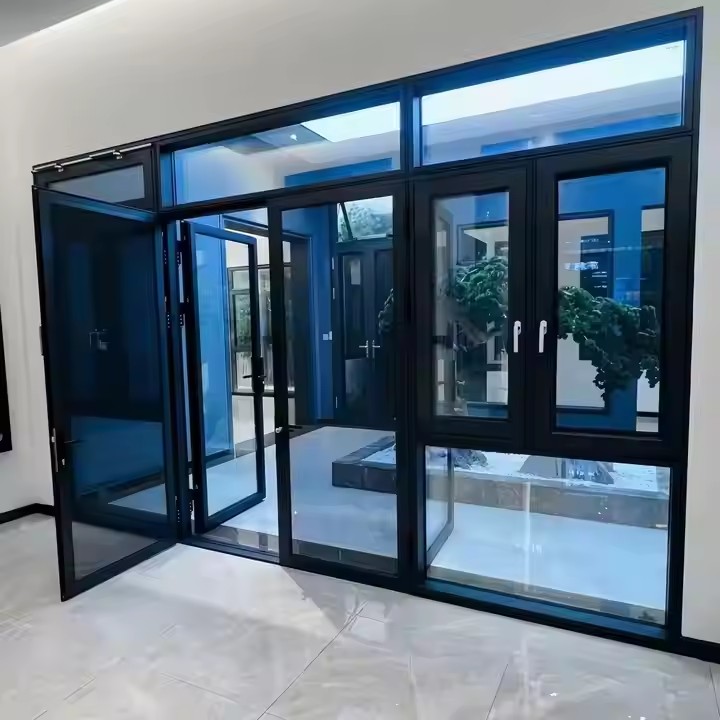
For thermal insulation, a combination of multi-chamber profiles and triple-glazed insulated glass is essential. The profiles should preferably use high-strength 6063-T5 aluminum alloy, incorporating a thermal break system with PA66 GF25 insulation strips to form independent thermal chambers that effectively block heat transfer between indoors and outdoors. The glass should adopt a 5+20A+5+20A+5 triple-glazing configuration, filled with argon gas between cavities and coated with a Low-E layer on the inner pane. This setup can reduce the U-value to below 1.8 W/(m²·K), significantly outperforming Canada’s national building energy-efficiency standards. At the junction between the door frame and the wall, flexible sealing gaskets combined with polyurethane foam filling should be used to eliminate thermal bridging and minimize energy loss.
Wind resistance and structural strength must address the strong winds in Canada’s western coastal regions and the monsoon-like conditions of the central plains. Door panels should incorporate reinforced mullion structures with spacing controlled within 600 mm to enhance overall rigidity. Hardware systems should use heavy-duty hinges and multi-point linkage locks made of 304 stainless steel, allowing each panel to support up to 150 kg, while the entire door system can withstand Beaufort scale 12 winds. The bottom track should adopt a high-low rail design with anti-lift guide rollers to prevent snow and wind infiltration while avoiding panel displacement or derailment under strong wind pressure.
II. Spatial Logic Reconfiguration: Enhancing Layers and Transparency in Duplex Layouts
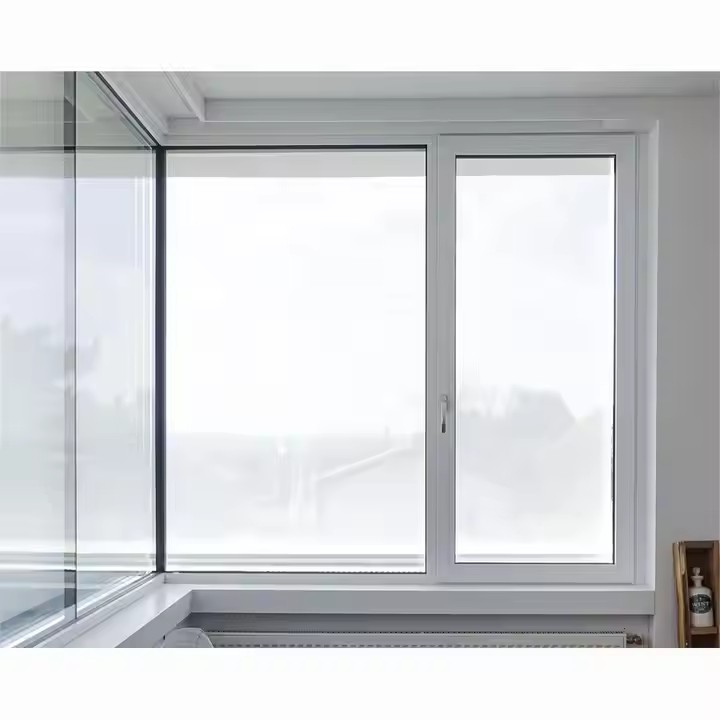
The core advantage of duplex spaces lies in their vertical layering and expansive views. Folding door design should reinforce these qualities, enabling flexible spatial transformation and seamless visual continuity. Design solutions should be customized for common duplex scenarios, such as connections between double-height living rooms and terraces, lofts and master bedrooms, or stairwell daylighting zones. Duplex homes typically require a larger number of openings due to their two-level structure, making lightweight folding doors an ideal choice to facilitate everyday living.
For duplex living rooms with ceiling heights exceeding 4.5 meters, a “segmented upper section + side-folding lower section” design is recommended. The upper portion can be a fixed glass curtain wall, with a height of 1.5–2 meters, ensuring ample daylight while reducing the weight of movable panels. The lower section consists of operable folding panels with heights of 2.5–3 meters and single-panel widths of 800–1000 mm. When fully opened, the panels can be neatly stacked to both sides of the wall, creating an integrated indoor–outdoor space that meets the needs of family gatherings, leisure, and scenic viewing. The opening direction should avoid stair circulation paths to ensure safe movement.
For connections between duplex lofts and master bedrooms, where ceiling heights are relatively limited (typically 2.2–2.8 meters), a “full-panel folding + ultra-slim profile” design is more suitable. Using narrow-frame profiles from the 120 series, with a visible width of only 18 mm, minimizes visual obstruction. Two- or four-panel symmetrical folding configurations allow the doors to stack on both sides of the loft entrance when opened, ensuring convenient circulation while enhancing natural light through glass panels and preventing a cramped atmosphere.
III. Material and Craftsmanship Selection: Balancing Durability and Natural Aesthetics
Top-tier residential design in Canada emphasizes the concept of “coexistence with nature.” Material selection for folding doors should balance durability with natural texture while complying with local environmental standards. The main material options include aluminum alloy, solid wood, and aluminum–wood composites, each chosen according to specific application scenarios.
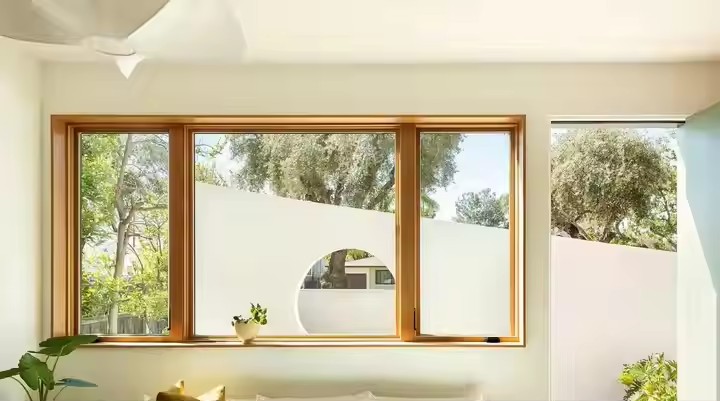
For outdoor transition areas, aluminum–wood composite doors are preferred. The exterior aluminum alloy profiles provide corrosion resistance and UV protection, while the interior uses locally sourced Canadian ash or maple wood. After degreasing and carbonization treatments, the wood resists deformation and cracking caused by humidity and temperature differences. The wood surfaces are finished with water-based eco-friendly coatings that meet Canada’s VOC emission limits, preserving the natural grain while minimizing indoor environmental impact.
IV. Performance Detail Optimization: From User Experience to Safety Assurance
The essence of top-tier design lies in meticulous attention to detail. Duplex folding door design should focus on ease of use, safety, and long-term durability to address potential user pain points.
For smooth operation, linked hardware systems combined with lightweight assist mechanisms enable “one-panel operation, multi-panel linkage.” Even door systems wider than 6 meters can be easily operated by a single person. Hidden floor magnets and position limiters allow panels to be fixed at any opening angle, preventing shaking or collisions caused by wind. To accommodate elderly users and children in duplex homes, handle heights should be set between 900–1000 mm, with rounded profiles to eliminate sharp edges and reduce safety risks.
V. Aesthetic Expression: Aligning with High-End Canadian Residential Styles
High-end Canadian residential architecture embraces diverse styles, including modern minimalism, Nordic naturalism, rustic vintage, and light luxury minimalism. Folding door design should align with the overall interior style while serving as a visual focal point through refined detailing.
In modern minimalist homes, folding doors should feature slim-frame profiles in matte black, pearl white, or light gray, paired with ultra-clear fluted glass to create clean, crisp lines. When fully opened, the doors can be completely concealed, blending seamlessly with walls and floors to emphasize openness and transparency. Ultra-thin LED light strips can be integrated into profile joints, creating soft ambient lighting at night and enhancing spatial depth and atmosphere.