
What Does the U.S. Market Value Most in Folding Doors?

Demand in the U.S. folding door market is shaped by the country’s vast climatic diversity, residential consumption habits, and stringent construction standards. Together, these factors form a value framework centred on performance, scenario adaptability, and smart integration. By 2025, the U.S. home renovation market exceeded USD 400 billion, with door and window replacement accounting for more than 15%. Folding doors—driven by their ability to transform space—have become one of the fastest-growing categories. This growth reflects the market’s precise expectations across multiple dimensions, including energy efficiency, structural reliability, and spatial versatility.
Exceptional energy performance is the “entry threshold” for the U.S. market, with Energy Star 7.0 serving as the primary benchmark. The EPA sets strict U-factor limits for different climate zones: ≤0.22 in cold regions and ≤0.27 in warm regions, an improvement of 15% over previous versions. These requirements directly accelerate innovation in glazing and profiles. Triple-silver Low-E glass—with 95% infrared reflectivity and 70% visible light transmittance—has become mainstream. When combined with a 16 mm insulated cavity filled with 90% argon, overall energy consumption can be reduced by 12–18%. For profiles, thermally broken aluminium frames with 24 mm thermal breaks, polyurethane foam filling, and triple EPDM gaskets keep air leakage below 0.3 cfm/ft², meeting ASTM E283 air-tightness standards. Products meeting these specifications can qualify for federal tax credits of up to USD 500 per household and command a 15–20% retail price premium—making them a top choice for consumers.
Structural reliability and weather resistance are essential for adapting to the U.S.’s diverse climate zones. The ANSI/BHMA A156.14-2024 standard provides a clear grading system for performance. To withstand the Northeast’s snowstorms, the South’s hurricanes, and the Midwest’s extreme temperature swings, folding doors must pass multi-dimensional testing. Grade 1 products endure 35,000 cycle tests, and large sliding-folding systems must pass a 60 lbf lateral load test as well as 10 slam-shut impact tests to ensure no permanent deformation. Hardware quality plays a decisive role: concealed hangers from brands like C.R. Laurence keep static and dynamic friction below 5% of panel weight, while soft-close systems ensure controlled deceleration and prevent panel damage. In hurricane-prone Florida, products must additionally pass wind-load certification, using reinforced profiles and eight-point locking systems to withstand Category 12–plus wind pressures—making “climate-specific engineering” a mandatory requirement.
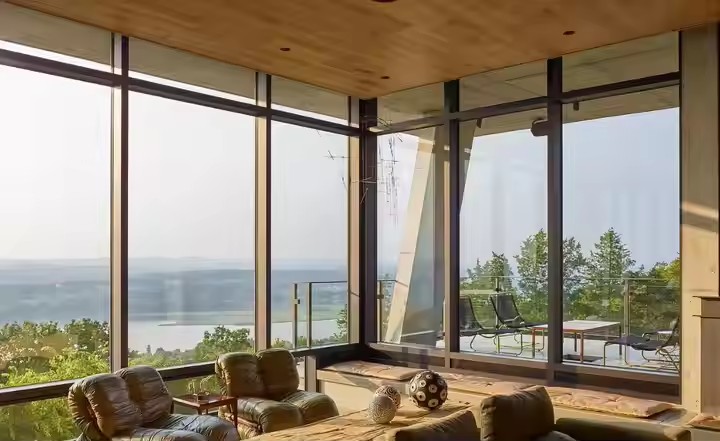
Spatial integration and scenario adaptability align with the American trend toward seamless indoor–outdoor living. The North American folding door market reached USD 4.36 billion in 2022, fuelled by the pursuit of open-plan lifestyles. In residential settings, ultra-slim frames with 85% glass area have become mainstream. When fully folded open, they create 6–8 metre wide openings that merge living rooms with patios—adopted in more than 60% of luxury projects in California and Texas. Commercial applications focus on flexibility: restaurants extend dining areas outdoors, offices reconfigure meeting rooms quickly, and premium developments use double-height folding walls to create over 30-metre spans. For smaller homes, inward-folding compact designs save up to 80% of the operating space, while large apartments favour bi-directional folding configurations to accommodate diverse layout needs.
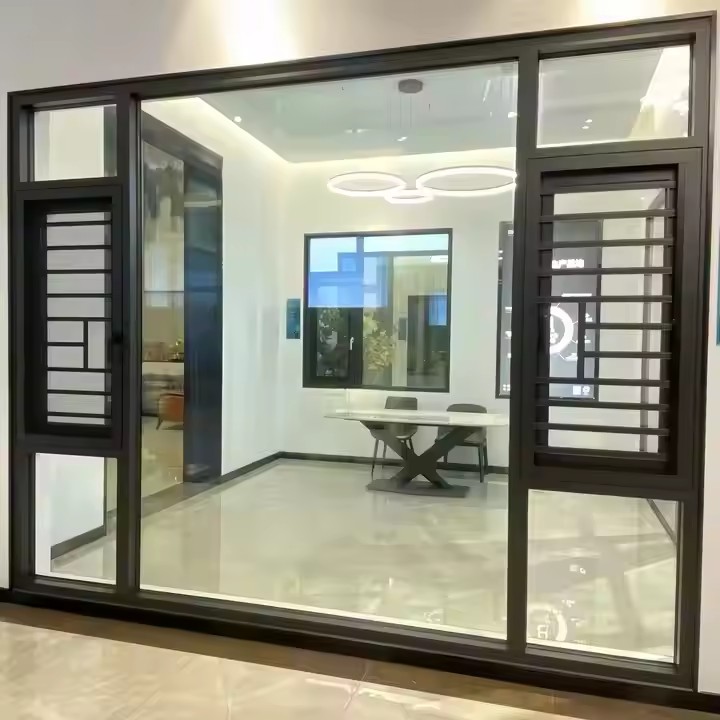
Smart integration and sustainable materials are emerging as key drivers of product upgrades. By 2025, the U.S. smart-home market will surpass USD 150 billion, raising smart folding door adoption above 35%. Brands such as View and other IoT suppliers offer systems with remote operation, status monitoring, and variable-transparency smart glass that adjusts light and privacy automatically. In sustainability, recycled aluminium profiles now exceed 70% usage rates, while wood-plastic composites with FSC certification meet consumer expectations for eco-friendly materials. Customisation further strengthens market competitiveness—from 2- to 14-panel configurations, dual-tone finishes (e.g., warm off-white indoors paired with charcoal grey outdoors), to stylistically matched copper hardware and timber grilles—meeting the aesthetic needs of modern, farmhouse, mountain, and minimalist architectural styles.
Ultimately, U.S. market demand for folding doors reflects a combination of practicality and lifestyle aesthetics. From Energy Star performance benchmarks to ANSI structural requirements and scenario-driven spatial design, every expectation points toward long-term value. This value orientation drives continuous innovation—ensuring folding doors can withstand extreme weather, reduce operating costs, and enhance quality of life through flexible layouts and smart features. For products entering the U.S. market, aligning with these core expectations is essential for securing a place in the vast renovation and new-build sectors.