
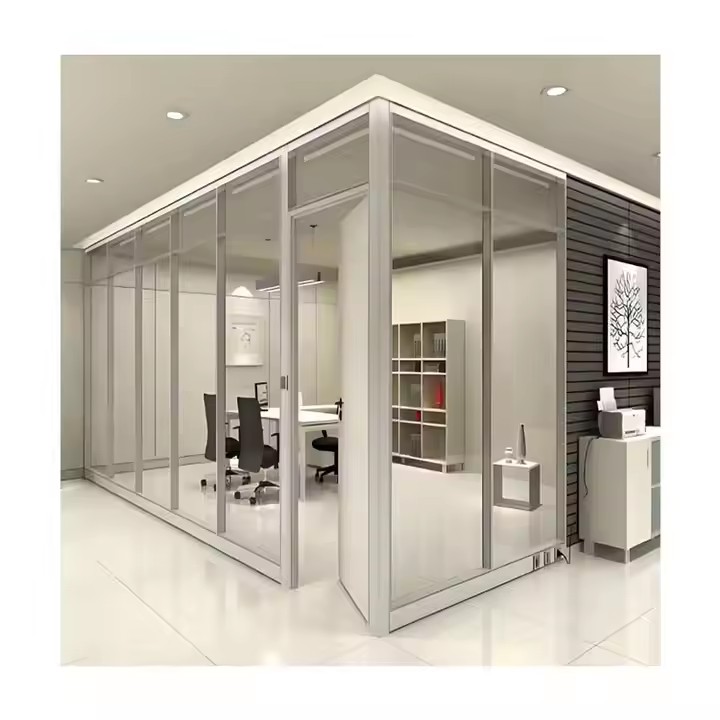
- Core Recommended Alloy Series: 6063-T5 as the Mainstream Choice
6063-T5 is the dominant aluminium alloy used for sliding doors in Australian commercial buildings. With magnesium content at 0.45%–0.9% and silicon at 0.2%–0.6%, it delivers a tensile strength of 210–260 MPa and a yield strength of 170–240 MPa. This ensures durability against the repeated opening and closing of sliding doors, while also resisting deformation under Australia’s extreme summer temperatures that often exceed 40°C.
Products such as the Palede Australia-exclusive sliding door series use this alloy combined with thermally broken structures. A main profile thickness of 1.8–2.0 mm provides sufficient resistance to fluctuating climate conditions. The material also offers excellent formability, supporting multi-cavity profile designs that enhance bending and torsional resistance, preventing sash deflection under strong winds—ideal for the large-size sliding doors commonly used in commercial buildings.
For larger spans or buildings located in cyclone-prone regions, 6061-T6 is a better option. With tensile strength reaching 310 MPa, it can withstand wind loads above 150 km/h. However, due to its relatively weaker corrosion resistance, it requires more rigorous surface treatment.
In short, high-strength aluminium alloys are the optimal foundation.

- Recommended Profile Wall Thickness
Under the Australian AS2047 standard, the minimum wall thickness for window frame aluminium is 1.2 mm. However, commercial buildings require significantly higher strength for sliding doors.
For typical commercial sliding doors, a wall thickness of 2.0–3.0 mm is recommended. Many compliant commercial systems in Australia use 2.0 mm extruded aluminium profiles.
For ultra-wide panels or doors positioned on high-rise facades, structural sections may require 3–4 mm wall thickness, with optional internal steel reinforcement to prevent deformation under the weight of large glass panes. This directly aligns with the stringent wind-load requirements of AS1170.2 for commercial buildings.
- Surface Treatment According to Climate Conditions
Australia’s diverse climate requires targeted surface treatment:
For coastal regions such as Sydney or the Gold Coast, where salt spray accelerates corrosion, PVDF coating or powder coating of ≥60 μm is recommended. PVDF offers over 5,000 hours of salt-spray resistance—far exceeding the 1,000-hour rating of common coatings—effectively preventing rust or coating degradation.
For inland regions such as Perth where temperatures are high, anodizing performs better. It withstands short-term temperatures up to 150°C and offers hardness equivalent to Mohs level 3, resisting scratches and UV-induced aging.
- Thermal-Insulation Structure Upgrades
Energy-efficiency requirements for commercial buildings in Australia are strict, so aluminium profiles should incorporate thermal-break technology.
A PA66 nylon thermal barrier is recommended for the thermal-break structure, with a thermal conductivity of just 0.25 W/(m·K)—1/1200 that of aluminium. Australian building regulations require the thermal strip width to be no less than 14 mm, and it must be SGS-certified to avoid low-quality PVC strips that degrade within 3–5 years.
When combined with Low-E insulated glazing, thermally broken aluminium profiles can reduce the sliding door U-value to below 2.0 W/(m²·K), meeting NCC energy-efficiency standards and lowering HVAC energy consumption.
- Compliance and Additional Requirements
The selected aluminium must pass ACRS certification, including tensile and yield strength testing, and comply with AS/NZS 4600 and other relevant standards. Manufacturers should also provide an EPD (Environmental Product Declaration) and avoid using stabilizers containing lead, cadmium, or other heavy metals, ensuring compliance with Australia’s environmental requirements.
Additionally, multi-cavity profile structures can enhance acoustic and wind-pressure performance. When paired with premium hardware such as Siegenia (Germany) or Doric (Australia), the system can withstand frequent commercial-building usage, ensuring long-term stability and reducing maintenance costs.