
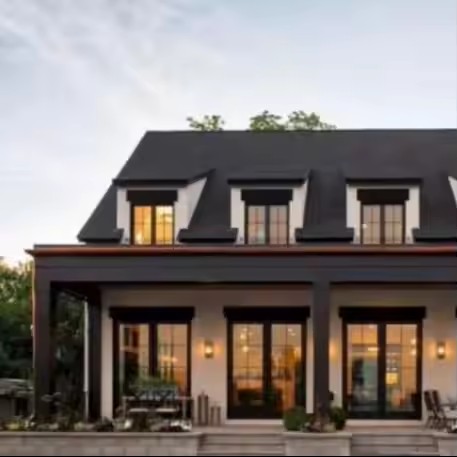
- Core Frame Material Selection: Dual Requirements of Anti-Corrosion and High Load-Bearing
(1) Preferred Alloy Materials
The high-salt, high-humidity coastal environment is extremely corrosive to aluminum. Avoid ordinary aluminum alloys and prioritise 6063-T6 thermal-break aluminum alloy or 316 stainless-steel reinforced aluminum:
6063-T6 aluminum alloy contains magnesium and silicon, offering tensile strength up to 260 MPa and yield strength up to 240 MPa. When paired with PA66 nylon thermal breaks, it forms a thermal-break structure that achieves both strong load-bearing capacity and excellent heat insulation—ideal for coastal areas with large day-night temperature variations.
316 stainless steel offers corrosion resistance three times higher than ordinary steel, exceeding 10,000 hours in salt-spray testing. It is suitable for structural reinforcements such as frame skeletons or exposed hardware components, especially in high-salt coastal regions like Sydney and the Gold Coast.
(2) Wall Thickness & Structural Reinforcement
According to Australian Standard AS2047, the minimum wall thickness for coastal sliding window frames must be no less than 1.8 mm. Main structural profiles should be upgraded to 2.0–2.5 mm, and load-bearing sash frames may include 316 stainless-steel reinforcements for improved resistance to bending and torsion under coastal winds exceeding 120 km/h.
Use multi-cavity profile structures with no fewer than three chambers to improve rigidity and create air-insulated layers for enhanced energy efficiency, while reducing salt accumulation inside the frame.

- Glass Configuration: Balancing Safety, Wind Resistance, Anti-Glare, and Energy Efficiency
(1) Recommended Glass Types
The core recommendation is Low-E insulated laminated glass, with the configuration:
5 mm laminated layer + 12 mm insulated cavity + 5 mm Low-E glass.
The laminated layer (PVB or SGP) prevents shattering and complies with AS/NZS 2208 safety glass requirements—essential for large floor-to-ceiling or wide-span sliding windows.
Low-E coatings reflect over 80% of UV and IR radiation, reducing indoor heat gain. Argon-filled cavities further improve insulation, reducing the glass U-value to below 1.8 W/(m²·K), meeting NCC energy-efficiency standards.
In cyclone-prone regions (e.g., northern Queensland), upgrade to double-laminated insulated glass (5 mm laminated + 12 mm insulated cavity + 5 mm laminated). Impact resistance increases threefold, able to withstand 150 km/h winds and flying debris.
(2) Glass Size & Installation
Maximum recommended glass dimensions: width 1.8–2.2 m, height ≤ 2.4 m, to avoid wind-pressure deformation.
Use EPDM foam sealing strips + stainless-steel pressure beads for glass-frame joints. Seals must comply with AS/NZS 4020 and maintain a compression rate of 30%–40% to prevent salt intrusion.
- Sealing & Drainage Systems: Blocking Salt Intrusion + Fast Water Drainage
(1) Multi-Layer Sealing System
Adopt a three-layer sealing design:
EPDM primary seal between frame and sash
Foam seal between glass and sash
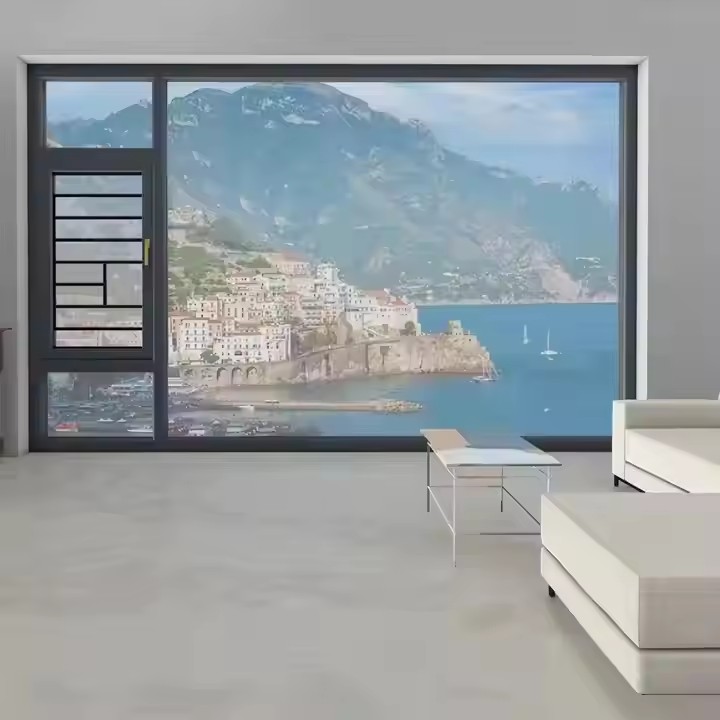
Silicone seal blocks at track ends
Together they form a fully enclosed sealing system that prevents salt, moisture, and air from entering the frame cavities.
Use EPDM rubber instead of ordinary PVC. EPDM offers over 15 years of UV resistance and maintains elasticity between −40°C and 80°C, ideal for extreme coastal climates.
(2) High-Efficiency Drainage
Sliding tracks should use a higher-outer, lower-inner sloped design (3°–5°) to eliminate standing water.
Each sash should include at least two drainage holes (≥12 mm), fitted with 316 stainless-steel anti-sand mesh to prevent blockage.
A drip channel below each drainage hole directs water outward, preventing infiltration into the villa’s exterior wall system.
- Surface Treatment: Dual Protection Against Salt Corrosion & UV Aging
Coastal windows require higher surface durability than inland installations.
(1) First Choice: PVDF Fluorocarbon Coating
Use a three-layer system—primer + topcoat + clearcoat—with a total thickness ≥80 μm and fluorocarbon resin content ≥70%.
PVDF coatings achieve 5,000+ hours of salt-spray resistance and 20+ years of UV aging resistance, preventing fading, peeling, and corrosion.
(2) Alternative: Anodizing + Electrophoretic Coating
Use anodizing with a minimum 25 μm oxide layer plus electrophoretic coating for hardness above Mohs 4 and excellent scratch resistance.
Suitable for low-salt southern regions (e.g., Victoria coastline), but requires maintenance every 5 years.
(3) Colour Selection
Prefer light colours (e.g., beige, light grey), which reflect UV radiation 40% more than dark colours, reducing thermal expansion.
Avoid black or dark brown, which accelerate coating degradation.
- Hardware & Track System: Designed for High-Frequency Use + Corrosion Resistance
(1) Hardware Selection
All hardware (tracks, rollers, locks) must be 316 stainless steel or titanium-coated components. Avoid zinc-plated steel, which corrodes quickly in salt environments.
Select dual-wheel rollers with fiberglass-reinforced nylon cores, load capacity ≥150 kg, and lifespan ≥100,000 cycles—ideal for frequent use in villas.
Locks should be multi-point systems with at least three locking points for increased wind pressure resistance and anti-pry security.