

Compliance and Building Standards: Must Meet Australian Mandatory Regulations
Australia has clear national standards for building doors and windows. Folding door designs must first comply with the following core standards to ensure legality and safety:
AS 2047 – Windows and External Glazed Doors Standard
This standard specifies the basic performance indicators for folding doors, including material strength, opening methods, sealing performance (waterproofing, wind resistance), and hardware durability.
For example, the connection between the door frame and the wall must withstand at least 1.5 times the door’s own weight to prevent deformation or detachment. This aligns well with manufacturers’ needs and is favored by overseas clients.
Glass components must comply with AS/NZS 2208 – Safety Glazing Materials in Buildings: for low sills (≤1100mm above floor level) or easily impacted areas, toughened or laminated glass must be used to prevent injury from sharp fragments after breakage.
Energy Efficiency Standards (NatHERS / AS 2048)
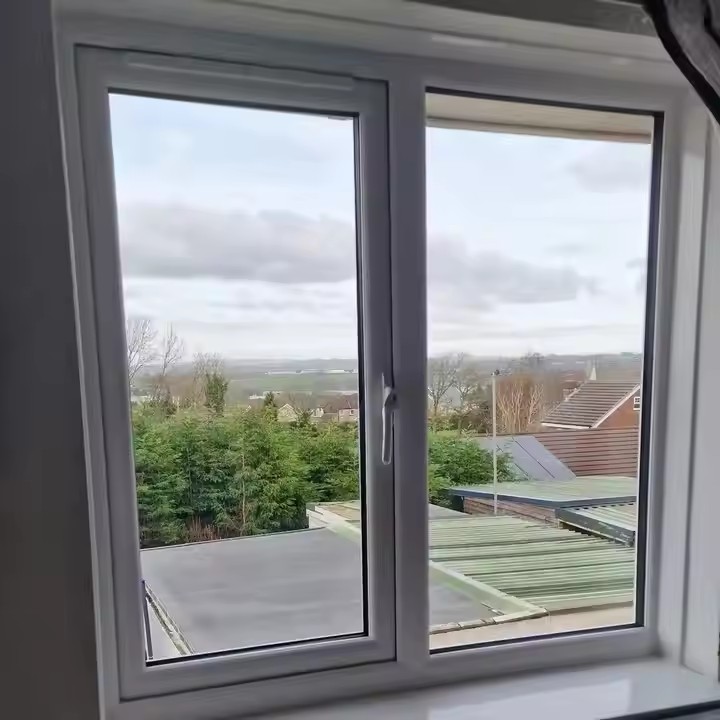
Due to Australia’s diverse climates—from tropical Queensland to temperate Victoria—folding doors must pass certification under NatHERS (Nationwide House Energy Rating Scheme).
Glass types (e.g., Low-E or insulated double glazing) and frame insulation must be adjusted by region to reduce energy consumption for heating and cooling.
For instance, in southern cold regions, doors should have a U-value ≤ 2.8 W/(㎡·K) (the lower the U-value, the better the insulation), while in northern hot areas, additional shading is needed to prevent solar heat gain. Because Australia’s energy standards are stringent, compliant doors and windows are highly standardized and well-recognized.
Fire Safety and Egress Regulations (AS 1530.4)
If folding doors are used in public buildings (e.g., shopping malls, offices) or residential fire compartments, they must meet fire-resistance requirements (e.g., ≥60 minutes).
Materials must be fire-retardant (e.g., aluminum alloy or fire-treated timber), and the doors must open toward the escape route to ensure quick evacuation during emergencies.
Climate Adaptability: Withstanding Australia’s Extreme Weather
Australia faces heavy rainfall, strong winds (e.g., tropical cyclones), and intense UV exposure. Folding doors must therefore be designed for superior environmental durability.
Wind Resistance and Pressure Performance
Coastal regions (e.g., Sydney, Brisbane) must meet AS 4055 – Wind Loads for Housing, selecting reinforced profiles according to regional wind load ratings (up to Class D, ≥25m/s wind speed).
This includes thicker aluminum frames (≥1.8mm wall thickness) and multi-point locking hardware to prevent shaking or damage during storms.
Waterproofing and Drainage
Door bases should include high and low water bars (≥15mm height) to prevent backflow.
Frames should incorporate angled drainage holes (≥8mm diameter) with anti-blocking filters to avoid sediment buildup.
All joints between glass and profiles must use weather-resistant silicone sealant (complying with AS 4020 for materials in contact with potable water), ensuring long-term resistance to UV exposure and moisture without cracking.
UV Protection
Frame materials such as wood or plastic must undergo UV protection treatment—wood coated with UV-resistant varnish and plastic containing UV stabilizers—to prevent fading or embrittlement.
Glass with a UV-blocking layer is recommended to protect indoor furnishings from sun damage.
Safety Design: Anti-Pinch, Anti-Fall, and Misoperation Prevention
Due to their multi-panel linkage structure, folding doors require careful attention to moving parts and the safety of vulnerable users such as children and the elderly.
Anti-Pinch Protection
Gaps between panels (especially at hinges) should include soft anti-collision strips (e.g., EPDM rubber) or concealed hinges to prevent finger injuries.
Motorized folding doors should feature infrared sensors that stop or reverse motion when obstacles are detected.
Anti-Fall and Structural Stability
For top-hung systems, tracks and rollers must support ≥50kg per panel and include anti-drop devices (e.g., clip-lock rollers that hold panels even if tracks fail).
For bottom-track systems, ground tracks must be firmly anchored to prevent loosening after prolonged use.
Locks and Emergency Egress
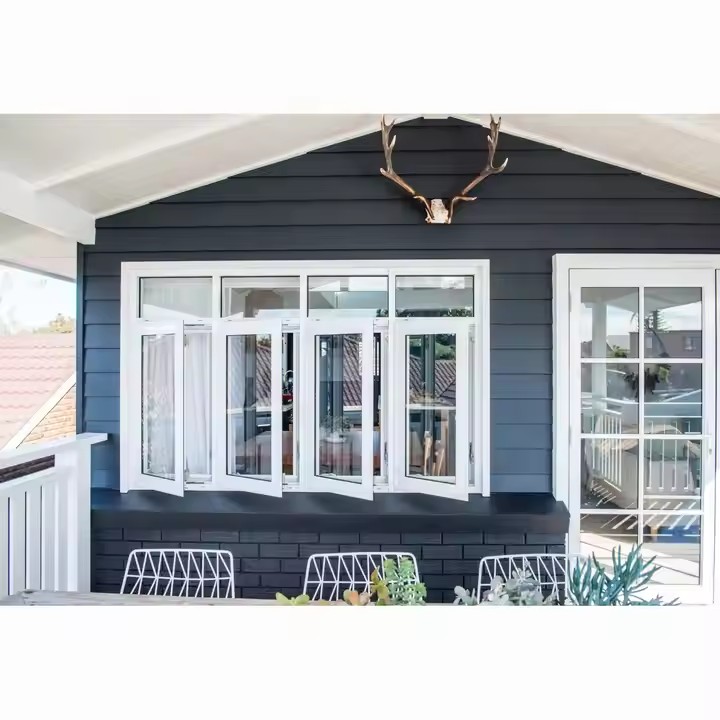
External locks should be anti-pry cylinders (AS 4145 compliant), while the interior should include emergency release mechanisms (e.g., turn knobs operable without keys) to ensure quick escape during fire or emergency situations.
Functionality and Usability: Operation, Space, and Maintenance
The primary purpose of folding doors is to provide flexible space division, so design must balance functionality with everyday convenience.
Opening Method and Space Optimization
Choose the opening direction according to location:
For indoor partitions (e.g., living room to balcony), bi-directional folding saves space.
For outdoor patio doors (e.g., garden access), single-direction folding aligns with walls to maximize outdoor area.
Each panel should be ≤900mm wide (manual) or ≤1200mm (motorized) to prevent heavy operation. For total widths over 3m, use multiple linked groups (e.g., six panels in two sets of three) for smoother operation.
Hardware Durability
Use stainless steel (grade 304 or 316) or brass for hinges, rollers, and locks.
In coastal areas with high salt exposure, 316 stainless steel is preferred to prevent corrosion.
All hardware should pass 100,000-cycle opening tests (as required by AS 2047) to ensure long-term reliability.