
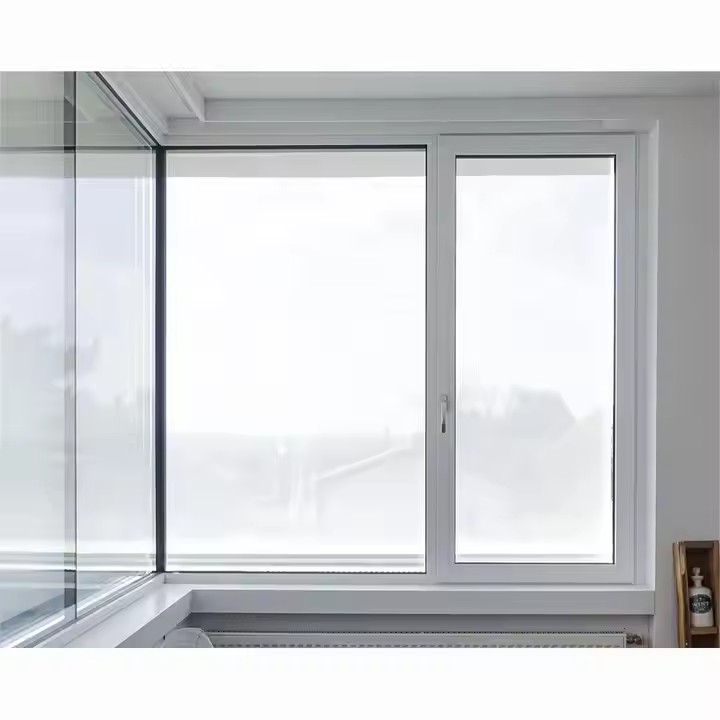
- Environment-Driven Design Principles: Responding Accurately to Extreme Coastal Conditions
The unique environmental characteristics of Canada’s coastal regions mean that curtain wall design cannot follow the conventional logic used for inland buildings. Instead, structural decisions must be based on precise environmental parameters.
Corrosive Environment
Areas within 10 km of the coastline fall under high salt-spray exposure zones. Chloride ion concentrations may reach 500–1000 mg/m³, corresponding to C5-M in ISO 9223 classification. This highly corrosive environment accelerates:
Electrochemical corrosion of metal components
Aging and cracking of sealing materials
Edge deterioration of glass panels
Mechanical Environment
Regions such as Newfoundland on the Atlantic coast and British Columbia on the Pacific coast are high-risk hurricane zones. Basic wind loads can reach 3.5–5.0 kPa, with gust factors ≥ 1.5. Strong winds exert not only positive pressure on curtain walls but also generate significant negative wind suction, which may cause:
Structural silicone failure in unitized systems
Panel detachment
Loss of adhesion in concealed-frame curtain walls
Temperature Environment
In many coastal provinces, winter temperatures may drop to −40°C (e.g., coastal Quebec), while summer temperatures exceed 30°C, creating an annual temperature difference of more than 70°C. Such drastic thermal cycling can cause:
Expansion and contraction of materials
Joint cracking
Sealant failure
Furthermore, intense UV radiation at high latitudes accelerates polymer degradation, while alternating salt spray, rainfall, and freezing–thawing cycles may damage the glass–frame interface.
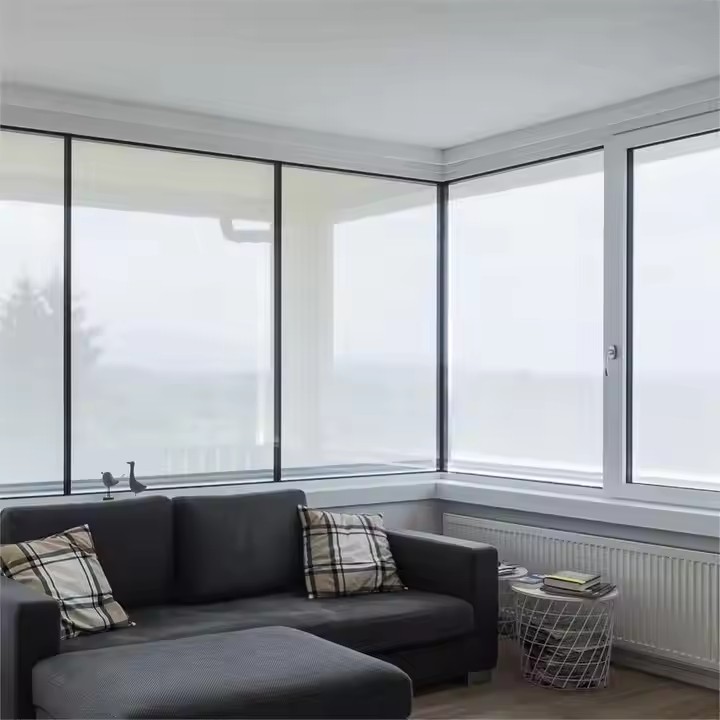
These environmental factors require that Canadian coastal curtain wall design be built upon four core objectives:
1) Anti-corrosion
2) Resistance to strong wind loads
3) Anti-deformation capacity
4) Water-tightness and leakage prevention
- Selection of Structural Systems: Balancing Mechanical Performance and Environmental Function
Choosing the right curtain wall system is the key decision in coastal design. Selection should consider building height, functional needs, environmental intensity, and cost efficiency. The guiding principle is:
“Match mechanical performance to environmental loads, and ensure the structural form supports corrosion and sealing requirements.”
Unitized Curtain Wall System – The Preferred Solution for Coastal Canada
Due to its comprehensive performance advantages, unitized curtain walls are the top choice in high-salt, high-wind coastal areas.
Key characteristics:
Factory Pre-assembly
Panel units (frame, glazing, sealants, hardware) are preassembled in a controlled environment.
This ensures high processing accuracy (tolerance ≤ 0.5 mm)—significantly superior to site-assembled stick systems.
Dual-Layer Sealing System
Unitized systems combine:
Dry gaskets, and
Wet structural sealants
Panel joints employ interlocking male–female profiles to form a pressure-equalization chamber, effectively preventing saltwater intrusion.
Water-tightness performance reaches ISO 6944 Level 6 (≥500 Pa with no leakage), fully meeting coastal water-resistance requirements.
Elastic Connection for Deformation Absorption
Each unit is connected to the main structure via elastic anchors, allowing the system to absorb wind-induced building movement.
Mullions and transoms typically use hollow aluminium profiles (e.g., 6063-T6) with:
Section modulus ≥ 100 cm⁴
Wind-resistance capacity 30% higher than conventional stick systems
This makes unitized curtain walls suitable for high-rise commercial buildings and hotels exceeding 50 meters.
How to Balance Aesthetics and Functional Value in Curtain Wall Design?
A curtain wall is a non-load-bearing exterior envelope, so its design must deliver both visual appeal and functional value. This can be achieved through different façade geometries—flat, curved, or irregular forms.

Flat Curtain Wall
A flat curtain wall features a façade dominated by straight lines and planar surfaces. Its characteristics include:
Clean and simple visual expression
Strong sense of geometric segmentation
Smooth and stable appearance
Cost-effective construction
It is an ideal choice for projects with limited budgets while still achieving refined aesthetics.
Application Scenarios
Curtain walls are widely used in:
High-rise towers
Commercial complexes
Residential buildings
In these settings, curtain walls contribute to building harmony, aesthetics, and overall façade durability.
Common variations include:
Standard rectangular grids
Exposed-frame systems
Concealed-frame systems
Metal frameworks with regular or irregular patterns
Horizontal or vertical articulation emphasizes horizontal openness or vertical elegance, enhancing visual rhythm.
Stepped and terraced façade designs further introduce spatial layering and depth.
Curved Curtain Wall
A curved curtain wall breaks away from flat-surface constraints and introduces a dynamic, flowing form.
Single-Curved Surfaces
These bend in a single direction, such as:
Cylindrical arcs
Curved façade walls
Arc-shaped designs offer strong visual appeal, presenting different aesthetics from every viewing angle.
Horizontal Curved Forms
Examples include:
Curved balconies
Ring-shaped architectural layouts
These forms provide rhythmic, wave-like visual effects that enhance the building’s sculptural quality.