
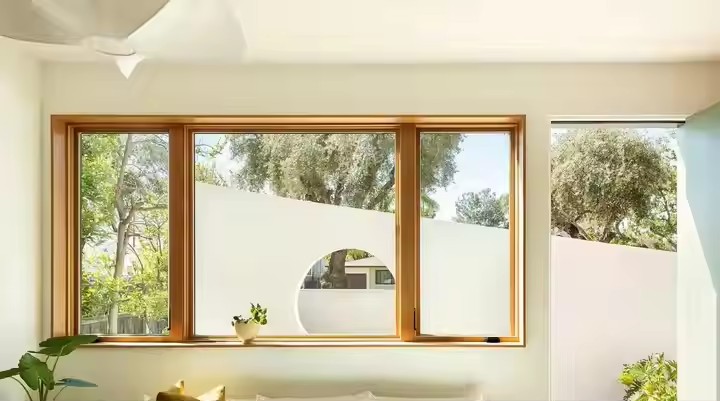
I. Frame Profiles: Prioritize “Low Thermal Conductivity + Anti-Freeze Deformation,” Avoid Single-Metal Structures
The frame profile serves as the structural backbone of doors and windows, and its thermal conductivity and stability under low temperatures directly determine insulation performance and service life. In extremely cold regions, pure aluminum alloys and other high-conductivity materials should be avoided. Instead, choose composite or high-insulation profiles. Below is a comparison of the main options and their suitable applications:
- Preferred Option: PVC-U (Unplasticized Polyvinyl Chloride) Composite Profiles
PVC-U profiles are the mainstream choice for residential buildings in Australia’s cold regions, offering excellent insulation and anti-freeze properties.
Their thermal conductivity is only 0.16 W/(m·K) — about 1/120 of pure aluminum alloy (205 W/(m·K)) — effectively blocking external cold air from penetrating indoors.
Even at -30°C, high-quality PVC-U profiles (enhanced with UV stabilizers and impact modifiers) maintain stable physical performance without cracking or deformation, and they resist UV aging — an essential feature under Australia’s strong sunlight (brands like Rehau and VEKA offer UV-protected layers).
To improve wind pressure resistance in regions with strong gusts, choose reinforced PVC-U profiles with internal steel liners, with a steel thickness of at least 1.5 mm, ensuring the frame resists deformation under snow and wind loads.
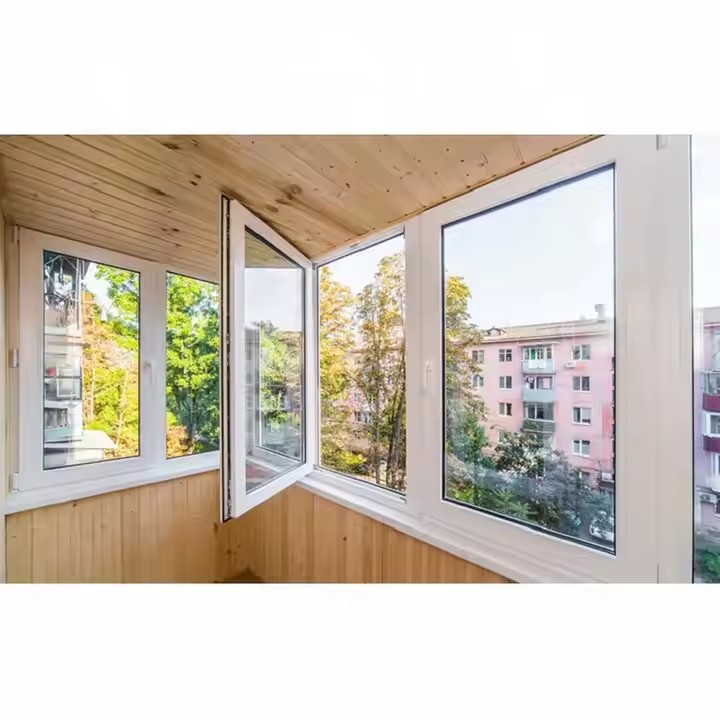
These profiles are suitable for core residential areas — bedrooms, living rooms, etc. — where thermal and acoustic insulation (reducing wind noise by 15–20 dB) are important.
Avoid low-cost recycled PVC-U profiles, which can crack or chalk under low temperatures. When the composite profile uses high-quality raw materials in sufficient quantity, it ensures durability and long-term performance.
- Alternative Option: Thermal Break Aluminum Alloy (PA66-GF25 Insulating Strips)
For users preferring a metallic texture or requiring strong wind resistance (e.g., high-rise buildings), thermal break aluminum is a viable alternative — but the quality of the thermal barrier strip is critical.
Ordinary aluminum has a high thermal conductivity (205 W/(m·K)), which creates “cold bridges” leading to condensation. Therefore, only injected or mechanically joined thermal break structures with PA66-GF25 (nylon 66 reinforced with 25% glass fiber) should be used. This material has a low conductivity (0.3 W/(m·K)) and excellent stability from -40°C to 120°C, effectively blocking heat transfer.
Thermal break aluminum offers high mechanical strength (tensile strength ≥205 MPa) and deformation resistance, ideal for high-rise or wind-exposed commercial façades.
For surface protection, PVDF (fluorocarbon) or powder coating is recommended to improve UV and freeze–thaw resistance, preventing fading or peeling from snowmelt cycles.
Always verify the insulating strip material — some low-cost profiles replace PA66-GF25 with PVC strips, which become brittle below -10°C and are unsuitable for cold climates.
- Not Recommended: Wooden and Pure Metal Profiles
Solid wood or aluminum–wood composite frames, although moderately insulating (0.15–0.3 W/(m·K)), are problematic in humid cold environments (where winter humidity can exceed 80% due to melting snow). Wood absorbs moisture, deforms, molds, or suffers pest damage — leading to high maintenance costs and frequent repainting with protective coatings.
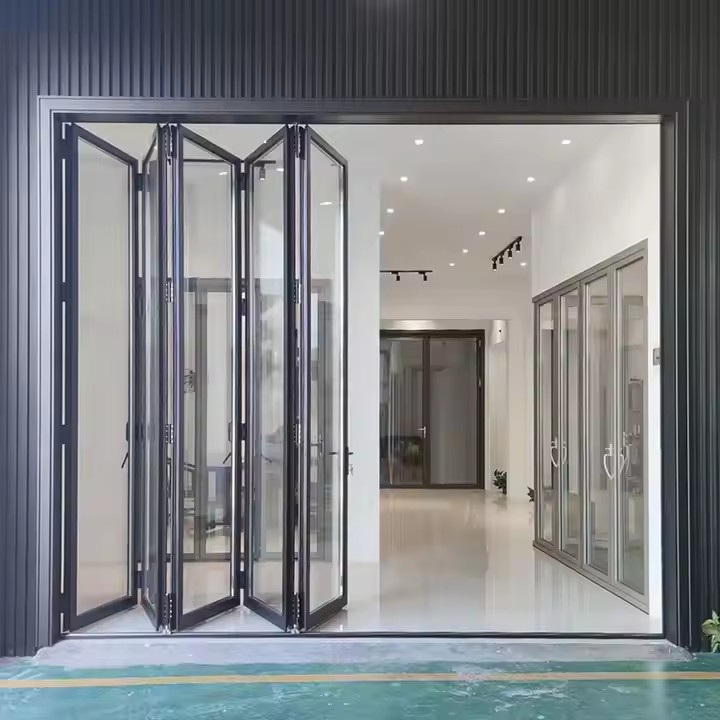
Pure metals (aluminum, steel, etc.) have excessively high conductivity, rapidly losing indoor heat and causing surface frost and hardware corrosion — not recommended for extremely cold climates.
II. Glass: The Core of Insulation — Choose “Multi-Layer Insulated + Low-E + Inert Gas” Combinations
Glass accounts for up to 70% of total heat loss through doors and windows.
In cold climates, a multi-layer + functional coating + inert gas filling design is essential to minimize heat radiation and conduction losses. The configuration should meet Australia’s insulation standard of U-value ≤ 1.8 W/(m²·K) (lower U-value = better insulation).
- Structure: Triple-Glazed Preferred, Double-Glazed Minimum
Single-pane glass (U ≈ 5.8 W/(m²·K)) offers almost no insulation.
The minimum standard is double glazing (5+12A+5) with a 12–16 mm air gap — thinner gaps reduce insulation, thicker ones cause convection. This lowers the U-value to 2.8–3.2 W/(m²·K).
For superior insulation, triple glazing (5+9A+5+9A+5) is recommended, with two air chambers blocking heat transfer, achieving 1.6–2.0 W/(m²·K) and preventing condensation or frost on glass surfaces.
Tempered glass is advised for outer panes (3–5× stronger than ordinary glass) to resist hail or falling snow.
For high-impact areas such as balconies or sunrooms, upgrade to laminated tempered glass (PVB interlayer) — it remains intact even when broken, enhancing safety.
- Functional Coating: Low-E (Low Emissivity) Film Is Essential
The inner surface (facing the air cavity) of insulated glass must include a Low-E coating, which reflects indoor infrared radiation (keeping heat inside) while allowing visible light through.
In extremely cold regions, offline Low-E coating (vacuum magnetron sputtering) is preferred for its superior emissivity (≤0.05) and better insulation, and it comes in various colors (e.g., silver-gray, light blue) to match building aesthetics.
Note: The Low-E layer must face the air cavity, not the indoor or outdoor side, to prevent oxidation. Professional installation is essential to ensure correct orientation and airtight sealing. For added durability, an additional protective layer can be applied over the coating.